
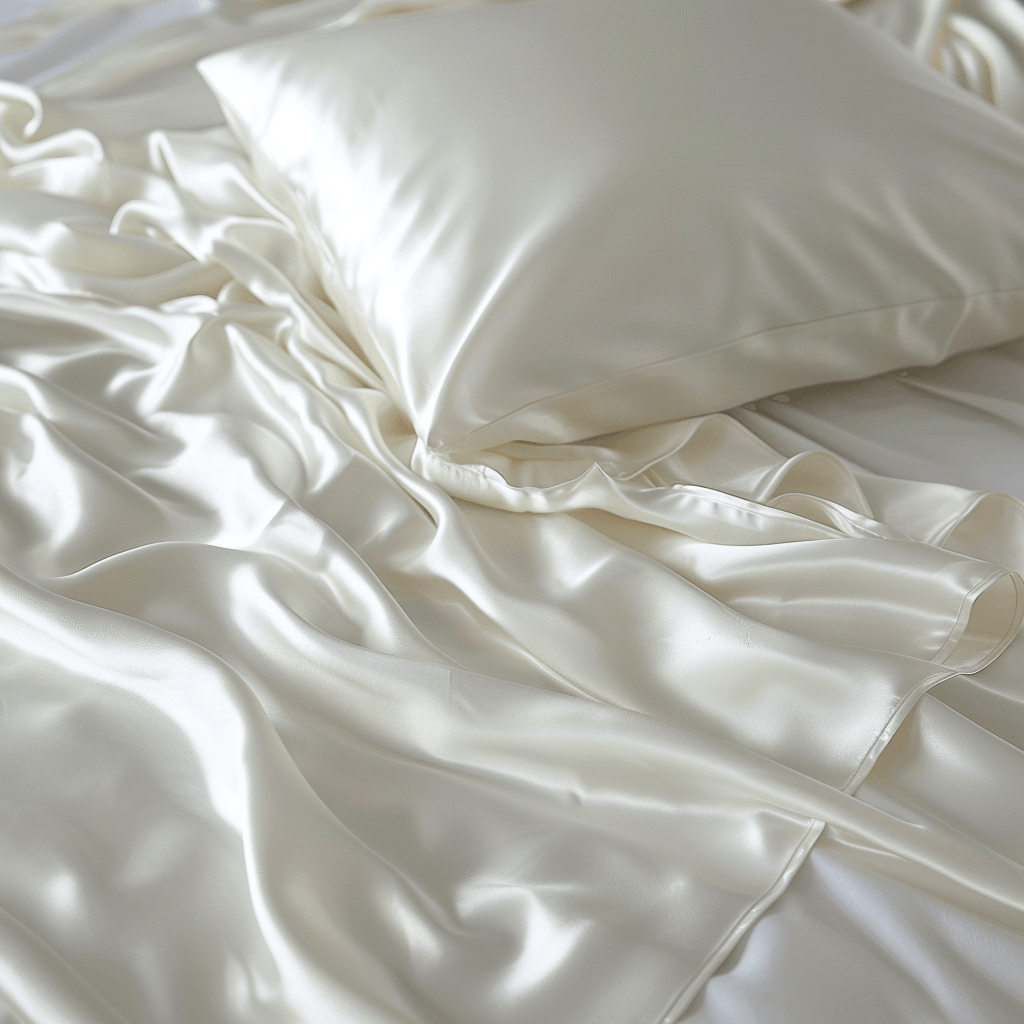
How do you know if your silk is real or fake?
Since its initial discovery in 3000 BC, silk has been the most sought-after textile in the world. It is a unique fabric, incredibly strong and flexible with a huge range of benefits and uses. Real silk is premium and luxurious, and its elegance and quality make it attractive to those who want to acquire a high-end product.
Given all this, it's no surprise that people and companies around the world are desperate to recreate its properties and sell cheap, fake silk products as if it were the real thing.
Unfortunately for us, this silk scam is becoming easier and easier with the acceleration of online shopping over the years. We see that the internet is flooded with fake silk and the problem here is – customers don’t know what they are buying or who they are buying from.
So how do I know if my silk is real?
While it may seem difficult to know if you are actually buying real silk, there are a few tips and tricks that can help you spot the differences between quality silk fabric and synthetic man-made material.
First of all, the price.
Of course, monetary value is always important when it comes to discerning real from fake, whether it's about grabbing that designer bag or getting a new silk dress.
Coming across a relatively cheap silk garment should immediately set off alarm bells. Silk is an incredibly expensive textile, and while some genuine manufacturers can afford to offer it at reasonable prices, if you see something at an extremely low price, it's probably too good to be true.
In general, real silk costs at least ten times more to produce than synthetic fibers, so it's unlikely you'll be able to grab a great deal when buying the real thing.
However, it is important to be careful, as the prices of fake silk can sometimes be inflated to make it look legitimate. In this case, we would recommend that you possibly do some research on the company in question and perhaps compare their seemingly high prices with those of genuine products. You can also trust the labels. Boder's silk pillowcases come with an Oeko-Tex 100 certification label. When you scan it, you will find information about the fabric of the product.
Satin or silk?
Be wary of anything listed as satin or “silk satin.” To the untrained eye, satin can often be misinterpreted as a type of silk – it is not.
Sure, there is satin with a crepe base, georgette with a satin face, etc., but that's because satin is a type of fabric. It's the term used to describe the weaving technique and isn't actually related to the material at all.
Instead, you want to look for products that are directly described as “Silk” or “Silk Satin” when you are looking for real silk.
Appearance
The difference between the way real silk looks compared to its imitations is priceless. The luster of silk simply cannot be replicated and is completely unlike any other fabric.
Highly prized for its lustrous properties, the triangular prism-like structure of silk fibers not only helps it shine, but also allows it to reflect light in different ways. This allows for a multi-colored glow as it refracts light from different angles to produce multiple colors.
With synthetic fibers, the material may appear to be shiny, but in reality, it only shines white, regardless of the angle.
Weaving
It can be difficult to identify, but by carefully examining the quality of its weave, you may be able to determine whether your silk is real or not.
Real silk is often hand-made, as it is susceptible to minor imperfections in the weave. Fake silk is usually mass-produced by machines and will almost always be flawless.
However, we should note that this is not a completely foolproof way of detecting – as real silk can also be produced by machines.
How to check if your silk is real
Once you have your silk (or faux silk) product, there are a few simple tests you can do at home if you are really unsure of its legitimacy.
Touch with hand
Just touch your silk and feel its smoothness. Real silk is completely smooth to the touch, with a soft and almost waxy feel.
For extra peace of mind, rub the silk between your fingers for a moment. Real silk heats up and becomes warm to the touch – if it doesn’t change temperature, it’s a fake.
The ring test
Take any jewelry ring you have on hand and place it on the fabric. Gently pull the silk through the middle of the ring and see how it performs.
Real silk should slide smoothly through the ring without any problems, while synthetic fibers tend to catch on the ring.
Note: The result of this test may also depend on the thickness of the fabric. In general, thicker silks will be more difficult to pull.
The burn test
This isn't a method we'd really recommend unless you want to completely destroy your silk fabric, but the accuracy of the results really can't be beat.
By trusting your sense of smell, by carefully and lightly burning the fabric, you will be able to detect the differences between the smell of burning real silk and burning artificial fabrics.
When burned, real silk will smell like burning hair and form a brittle ash. Once the flame is removed, it will stop burning.
If there is no ash and it smells like burning plastic, it is not real silk.
In conclusion , distinguishing real silk from fake requires vigilance amidst the abundance of fake products online. Key indicators such as price, labeling, appearance, and simple tests such as touch and burn tests can help as proof of authenticity. If you want a genuine and quality product, always buy from verified sources.